GBC pipe bevelers, pipe cutters and plate beveling machines are machines designed to last decades; It is no coincidence that several customers still use models purchased thirty years ago, preserved thanks to correct use and constant maintenance. On the contrary, downtime caused by avoidable failures is still one of the most underestimated operating costs in the industry.
In this article, the GBC technical team has collected the fundamental guidelines to optimize the use of these machines: we will see which mistakes to avoid, when to stop for a preventive check and how to request the support of our assistance service.
Which machines require frequent maintenance
There is no universal answer: it depends on the type of orders in progress and the intensity of use. In general, small and medium-sized pipe bevelers are the ones that arrive for assistance most often. The reason is simple: the most common diameters in the industry fall within the range covered by these models, so they are the most stressed machines. In periods when the market requires a lot of work on sheet metal, however, it is the plate beveling machines that show the most wear.
The real enemies of pipe cutters and bevelers: dirt, impure air and improper use
Almost all failures derive from the way in which machinery is used and stored. Below, the GBC technical team has summarized the most frequent errors encountered in the field.
Failure to clean after use
Machining chips tend to accumulate on mechanical parts: if they are not removed promptly, they penetrate the sliding and locking mechanisms, compromising their operation. A quick clean at the end of each work session is enough to prevent most soil-related problems
No or neglected lubricating filters
Often the filter-lubricator assemblies of the pneumatic line are not installed or do not benefit from regular maintenance. Without proper air lubrication, the air motor works “dry”, undergoing premature and structural deterioration.
Poor quality compressed air
The quality of the compressed air used in pneumatic pipe cutting machines or pipe beveling machines is poor: it drags dirt particles with it that enter the engine and damage it from the inside.
Machines left on shared workbenches
This is by far one of the most costly mistakes. Leaving the machine abandoned on the workbench at the end of use, often without any cleaning, means exposing it to the accumulation of dust and debris. The greatest risk is when grinders or similar tools are used on the same bench: metal particles and abrasive dust generated by these processes are deposited on the expansion shaft. As a result, the shaft turns over, the mechanisms seize, and the machine locks. The solution is to clean the machine thoroughly after each use and store it in its protective case, away from sources of dust and contaminants.
Wrong tools and forced feeds
The use of unsuitable tools or forced feed will transmit abnormal vibrations to the machine body. Over time, these vibrations loosen joints, accelerate bearing wear and impair machining accuracy. Tools should be compatible with the machine model and replaced when they show signs of wear.
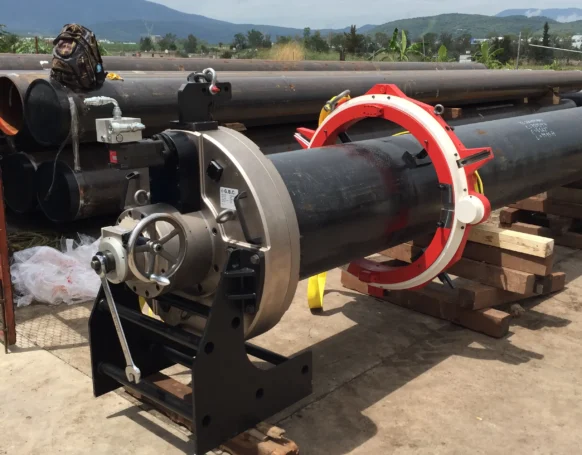
When to take action: Recognize the warning signs
There is no standard maintenance frequency that applies to all situations. A general annual check-up is a good habit, but the most important rule is to stop immediately when you perceive something abnormal.
If the feed wheel or expansion nut begins to offer abnormal resistance, machining must be stopped immediately. Continuing in that situation risks extending the damage to the connected parts: from a localized problem to an intervention on the shaft and engine, with much higher times and costs. Stopping in time means limiting the damage to only problematic parts.
Some of the signs to look out for:
- Feed hand wheel that becomes hard or uneven
- Expansion nut that puts up unusual resistance
- Abnormal vibrations during machining
- Unusual engine noise
- Loss of precision in cutting or chamfering
How repairs are carried out: the GBC workshop
The heart of the assistance service is the GBC workshop, where specialized technicians carry out the interventions relying on components produced internally or selected from a controlled supply chain. This direct monitoring makes it possible to reduce intervention times and to maintain availability of spare parts even for very old or discontinued machines.
If the workshop guarantees the best operating conditions, on-site interventions and remote support respond to different logics. On-site interventions are an exception. Diagnosing a fault remotely and predicting the exact combination of spare parts to bring to the field is complex; The internal workshop, on the other hand, offers instrumentation and testing standards that on-site work cannot replicate. GBC can assist the customer with remotely guided technical support to allow him to intervene independently. This option is feasible under two basic conditions: that the in-house operator has the necessary technical skills and that spare parts are already available on site.
GBC’s advantage in after-sales service
The difference compared to competitors is measured on three concrete aspects.
Spare parts availability
GBC guarantees the availability of components even for machines with many years of service or out of production. Those who bought a pipe beveler thirty years ago can still count on original spare parts and specialized technicians who know that model inside out.
Response times and reduced downtime
Unlike competitors – often limited by generic assistance, reduced stocks and long waiting times for quotes and repairs – GBC gives absolute priority to restoration interventions. The goal is to eliminate machine downtime, which in intensive production contexts generate significant direct costs.
In-house production and quality continuity
Producing the main components in-house allows you to reduce procurement times and maintain a constant quality standard on spare parts, eliminating dependence on fluctuations and delays in external supplies.
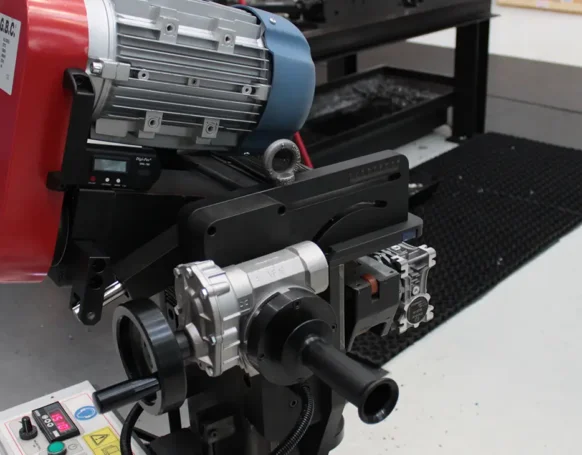
Practical tips to extend the life of machines
The GBC technical team’s indications at a glance:
- Clean the machine after each use, removing chips and processing residues
- Install and maintain lubricating filters on engines
- Use good quality compressed air in pneumatic machines
- Do not leave the machine on workbenches shared with grinders or other sources of metal powders
- Use only compatible tools that are in good condition
- Stop immediately at the first abnormal signal: do not continue to use the machine and do not improvise repairs
- Contact GBC Technical Service without waiting for the problem to escalate
Contact GBC Technical Service
For assistance on pipe cutters, pipe bevelers and plate bevelers and all our products, contact the GBC technical team for a diagnosis or a repair quote.